


The name Wild Bill Hickok is well known among Old West enthusiasts, but not so much the name of the man who put an end to his life. Wild Bill took his last breath on August 2, 1876, murdered by a man by the name of Jack McCall. The object of our attention in this Western Magazine Digest (WMD) article is the coward who did him in.

Most of us are aware of portions of Hickok's illustrious past. According to Terry Breverton, author of Immortal Last Words, Quercus Publishing, Inc., 2010, Hickok's full name was James Butler Hickok. He was born on May 27, 1837 in today's Troy Grove, Illinois.
The inscription on his tombstone reads, 'Wild Bill, j.B. Hickok killed by the assassin Jack McCall in Deadwood, Black Hills, August 2, 1876. Pard, we will meet again in the happy hunting ground to part no more. Good bye, Colorado Charlie, C.. Utter.'
Why We Celebrate the Old West in all Its Glory
None of us are here on planet Earth indefinitely, but many of us feel a small undefined quiver in the depths of our soul when we contemplate the actual events that surround famous men and women of the Old West. Over the last year, for example, the writers of WMD have covered the imaginary character, Inspector Douglas Renfrew of the Royal Canadian Mounted, which included many real-to-life cases in which actual Mounties were involved (LINK).
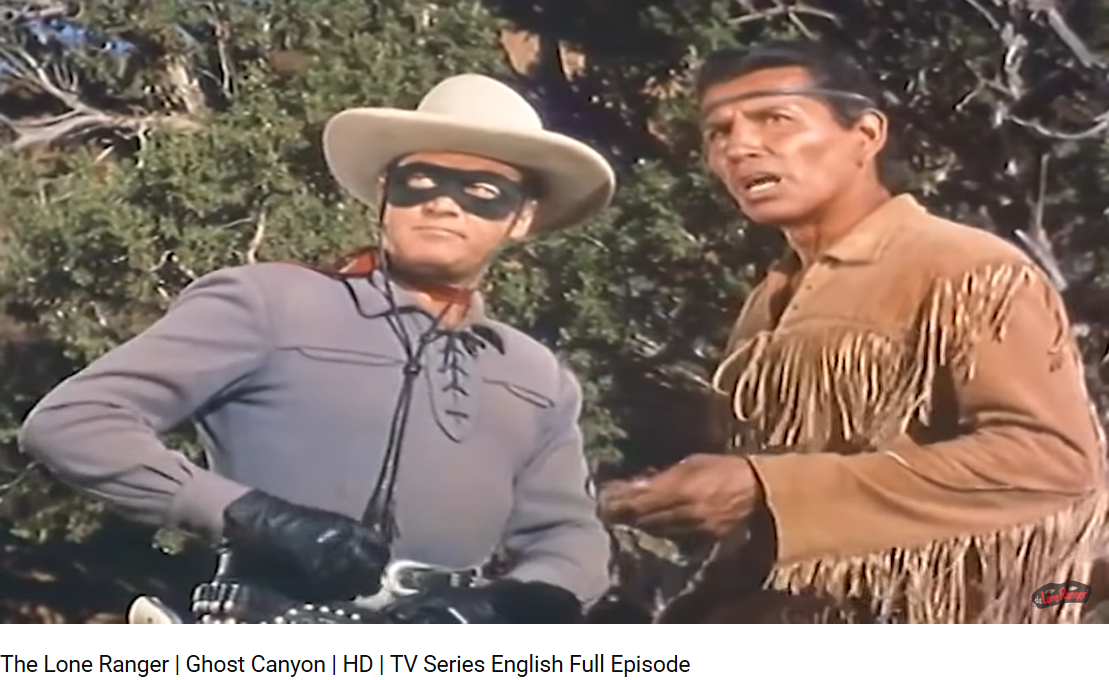
We also covered some of the gory details pertinent to Brevet Major-General George Armstrong Custer of the 7th Calvary and his defeat at the Battle of Little Bighorn (LINK). We agonized as we read about the deaths of all Custer's soldiers during the skirmish that ensued on June 25th, 1876. We also covered The Lone Ranger and Tonto (LINK); a former slave turned lawman, Bass Reeves (LINK); Davy Crockett (LINK); and Butch Cassidy and the Sundance Kid (LINK)!
This is what history is all about—not only to remind us of the mistakes that we've made in the past, but also to realize the solutions and lessons learned because of them. The objective of written history is to assure that we never make the same mistakes again. And yet, with that said, because of the bravery and love for others that some notable souls have shown during life threatening events--often forsaking self to save others—we find inspiration and thankfulness in the most odd places.
How McCall Pulled It Off
In the case of Wild Bill, if he could redo the events of that fateful day in 1876, I'm reasonably sure he would not have sat himself down in a chair with the entrance to his back. It was a poker game at Nuttal & Mann's Saloon #10 where the event took place. Evidently Hickok entered the game later than usual, so his customary chair with its back against the wall was not available and the person sitting there, Charles Rich, refused to trade.
So, in walks Jack McCall, who, for whatever reason, went by the alias of Bill Sutherland. Other aliases included Crooked Nose Jack and Broken Nose Jack.

Well, that second night, with Hickok's back to the door, McCall was able to position himself about three feet behind his chair, as if looking at Wild Bill's hand. As the story goes, McCall shot him point blank in the back of the head with his Colt single-action, .45-caliber revolver. Bystanders claimed that McCall shouted, “Damn you! Take that!”
According to historical records, McCall claimed he shot Hickok because he had murdered McCall's brother-in-law in Abilene, Kansas.
Hickok's Final Words and Recorded History
It's said that Hickok's final words, just before the shooting were, “The old duffer—he broke me on the hand.”

According to author Breverton, the first newspaper report of Hickok's death was published in the Black Hills Pioneer on the fifth of August, 1876. It read:
'On Wednesday about 3 o'clock the report stated that J.B. Hickok (Wild Bill) was killed. On repairing to the hall of Nuttall and Mann, it was ascertained that the report was too true. We found the remains of Wild Bill lying on the floor. The murderer, Jack McCall, was captured after a lively chase by many of the citizens, and taken to a building at the lower end of the city, and a guard placed over him. As soon as this was accomplished, a coroner's jury was summoned, with C.H. Sheldon as foreman, who after hearing all the evidence, which was the effect that, while Wild Bill and others were at a table playing cards, Jack McCall walked in and around directly back of his victim, and when within three feet of him raised his revolver, and exclaiming, “Damn you, take that,” fired, and ball entering at the back of the head, and coming out at the centre of the right check causing instant death, reached verdict in accordance with the above facts.'It Took Two Trials To Hang McCall From a Tree
In reality, the jury during this first trial deliberated for approximately 2 hours, after which a verdict of “not guilty” was rendered. But that was not the only trial to take place where Jack McCall was tried for the murder of Wild Bill Hickok.

Right about now, you might be asking whether this second trial equates to double jeopardy, as did I. But it was clear to local law enforcement in the area that McCall had not been tried in a legitimate court. A federal court in Yankton agreed and a date was set for a retrial.
I'm sure that Jack McCall, if he had more time to think about his mistake, would have ruled the day he ended up in Deadwood, but they didn't give him a lot of time to ponder his plight. A new trial began on December 4, 1876, and a guilty verdict was rendered on December 6th. His sentence was 'Hanging by the neck until dead.'
It was March 1, 1877, at 10:15 a.m., when Jack McCall met his maker in Yankton. He was only 24 years of age.

Allan B. Colombo has appeared in print since 1986. His work includes newspapers, print and digital magazines, and other forms of the written word. He and Gary Miller, WMD writer and co-founder, started this magazine in August of 2018. You can reach him at WMD@USA.com. Read more about him on his WMD Partner Page!

Be sure to visit THE TV WESTERN AND MOVIE FAN PAGE on Facebook!


 Please post a comment below!

